Spectrum Design Group

interior design process

Primary Bathroom Renovation: Why the Details Matter

The Primary Bathroom Renovation Advice That Gets It Wrong

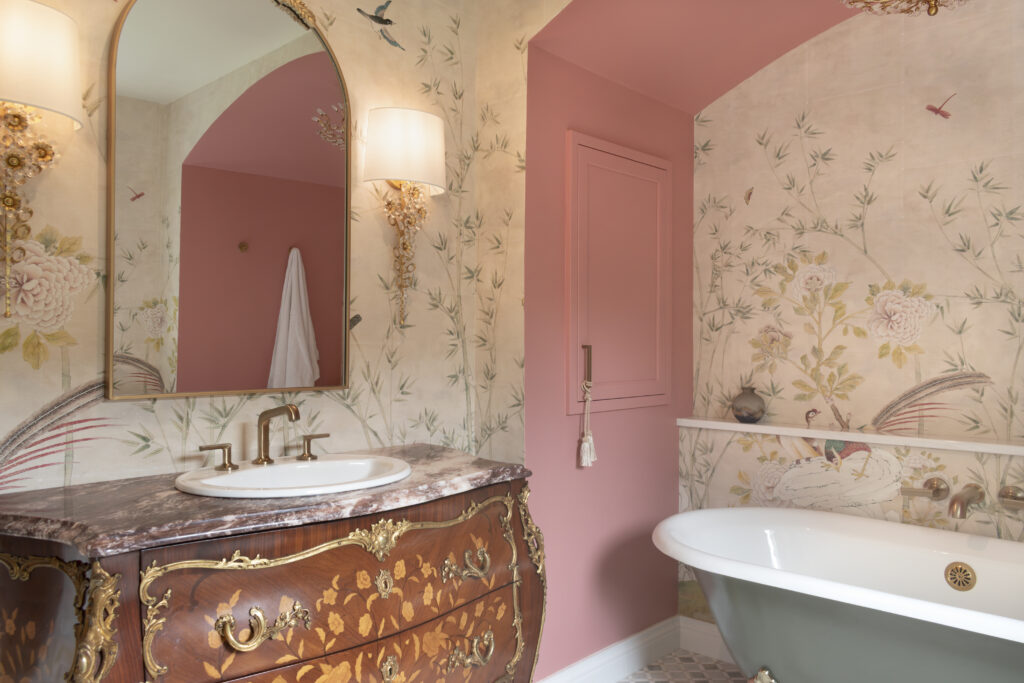
Key Takeaways The successful construction of a primary bathroom depends on more than a unified design vision—it requires attention to layout, sequencing, and buildable details. Many renovation problems stem from decisions made too late or without considering how materials and fixtures fit together, outside of aesthetics. Thoughtful planning early in the process helps prevent costly mistakes, protects the budget, and results in a bathroom that functions well for daily life. Before You Start a Primary Bathroom Renovation Last week, I came across a post in one of our local Facebook groups. A woman was looking for recommendations for someone to “draw up ideas/plans” for a primary bathroom renovation. She and her husband planned to do most of the work themselves, aside from plumbing and electrical. They didn’t need a contractor. Just ideas and plans. One of the replies said: “Talk with a quality contractor. You could even go to a supplier showroom. Don’t get lost in details. Try to have a unified concept or vision of what you want.” I have no way of knowing what he intended beyond his words, but I think he was likely saying, “Don’t overcomplicate it. Keep the big picture in mind.” That’s practical advice. But I couldn’t stop thinking about that one line: Don’t get lost in the details. Even hours later, I brought it up to my teenager, who looked at me and said, “Well, yeah, Mom. That’s kinda your job.” True. To a degree. Primary Bathroom Renovation: Why the Details Matter A good remodel is almost entirely about the details. Not the fussy, decorative kind—the structural ones. The ones that require sequencing. These are the decisions that no one posts about after the fact because they’re invisible once everything is finished. When people say, “just draw up plans,” it sounds simple. A layout. Some dimensions. Maybe a few elevations. But a bathroom isn’t a sketch. It’s a tight choreography of plumbing, framing, lighting, tile, cabinetry, and human movement. Inches, order, and timing all matter, especially in a bathroom. Where the shower valve lands in relation to the shower door swing. Whether the vanity drawers clear the casing. How tile terminates at an outside corner. How high the sconces sit once the mirror is installed. Those aren’t decorative details. They’re the details that determine whether a space feels right or slightly off every single day you use it. And they’re usually the things that go wrong when no one is assigned to think about them before the work starts. Where Bathroom Renovation Planning Goes Wrong I understand the appeal of keeping it simple, especially if you’re managing the work yourself. A primary bathroom renovation can already feel overwhelming, and the last thing anyone wants is to be buried under decisions. But problems don’t usually come from thinking too carefully. They come from not thinking things through (i.e. skipping the details). Tile selected after rough-in. Lighting chosen after the electrician has finished. Cabinetry ordered before final dimensions are confirmed. That’s when budgets shift. That’s when “we’ll just make it work” becomes a permanent bottleneck in the morning routine. There’s a difference between obsessing over perfection and being intentional. Being intentional means asking: How will the primary bathroom function at 6:30 a.m. on a weekday? Where will towels land? What happens when two people try to get ready at once? Will it still feel good in five years? Those answers aren’t found in a showroom, nor are they solved by a quickly sketched plan. A unified vision is important, but the vision won’t hold up for long under daily living conditions without the details. Detail is what turns preference into something buildable. The Value of a Design Team in a Bathroom Renovation Which brings me back to my teenager telling me this is my job—and a poorly kept secret. I am the one person in this office you don’t want in charge of your renovation. There are a variety of reasons, but for this article, let’s keep it to one (I don’t want to crush my self-confidence too much). I don’t see the details, at least not when it comes to design. Sure, I may pick up on some that most people wouldn’t because I work in the design world. But overall, I will not be able to tell you why a valve shouldn’t go in a certain place or why a particular faucet won’t work with the mirror at a certain height until it’s actually in place. I can’t visualize how something will truly come together unless I can see it. That’s where this incredible design team—from our principal to our interior designers to our project manager—takes something from good to great. They understand how the details shape the outcome and that knowledge changes everything. Here’s what I find interesting: the bathrooms that feel the most calm, the most cohesive, the most effortless to live in are almost always the ones where someone paid close attention to the details early in the process. They don’t feel overly designed. They simply feel like they work. That’s not an accident; it’s the result of a lot of quiet decisions made before anyone picked up a tool. So no, you shouldn’t get lost in the details. But you shouldn’t skip them, either. In remodeling, the details aren’t the distraction. They’re what makes the difference between a primary bathroom renovation that runs smoothly and one that costs more in both time and money, and between a project you simply finish and one you’re proud of.
Renovating an older home - Making a 100 year old home work for modern living.

Renovating an Older Home: How to Make It Work for Modern Living

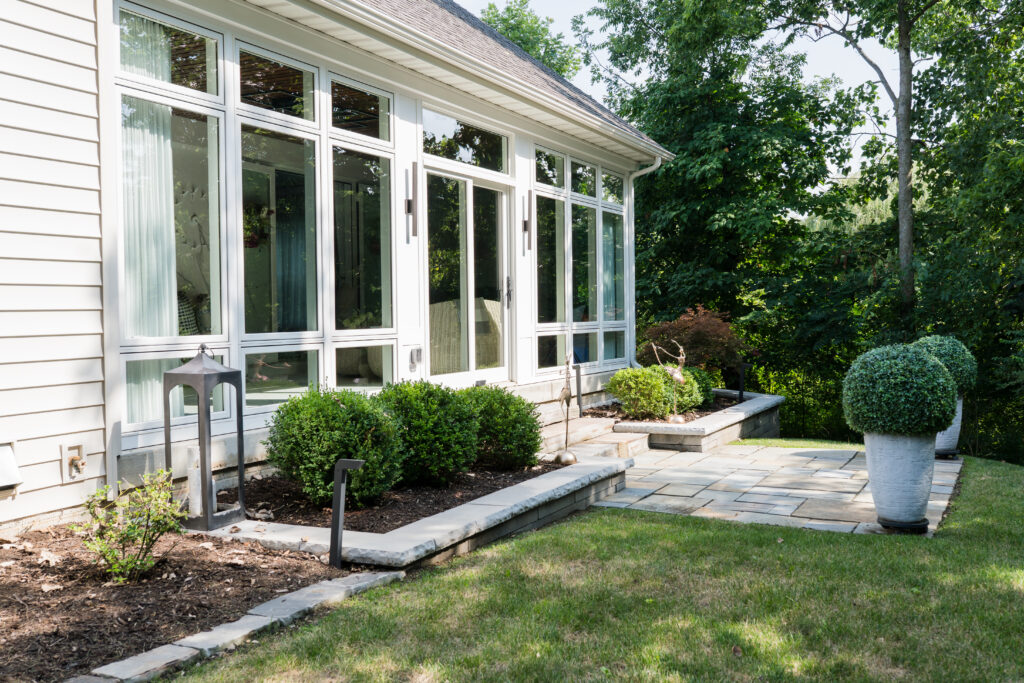
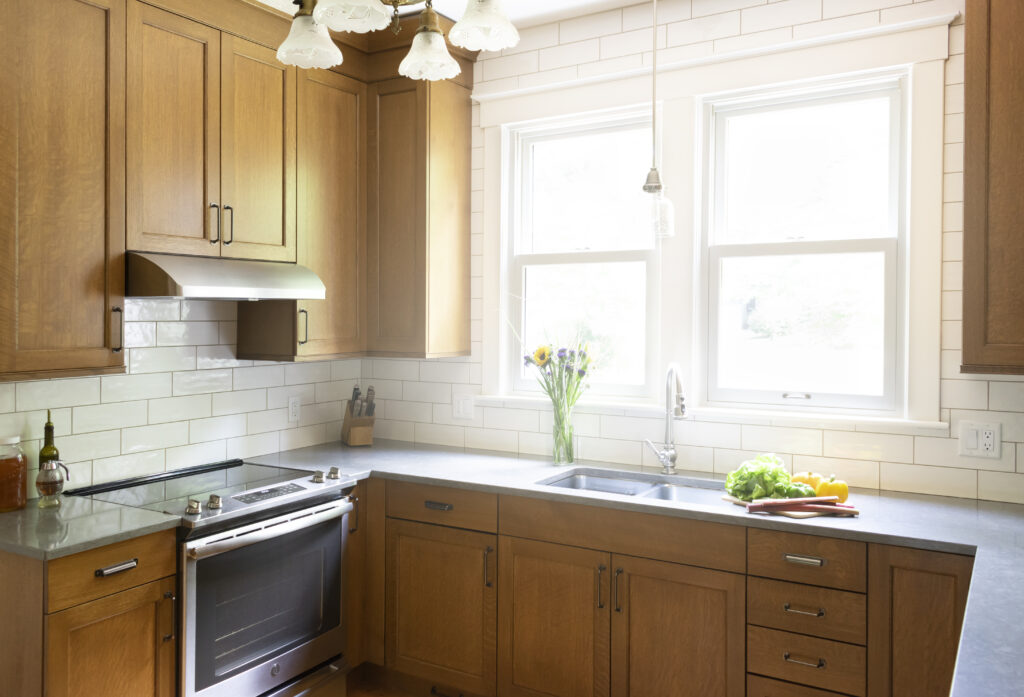
Key Takeaways for Renovating an Older Home Thoughtful renovations can preserve the charm of an older home while improving its function, comfort, and livability. Planning for surprises and having a flexible, experienced team makes all the difference when working with vintage architecture. The goal isn’t to recreate the past, but to design a home that reflects your life today while honoring its original character. What Makes Renovating an Older Home So Worthwhile (and So Complex) You’ve fallen for an older home. Maybe it’s the original wood floors with real patina, the proportions of an arched doorway, or the way light filters through wavy old glass. But more often, it’s something deeper—a sense of story, of possibility. At Spectrum Design Group, we work with clients who want to preserve what makes their home special while aligning it with how they live today. That doesn’t mean historical replication or museum-level preservation. It means thoughtful design that honors the home’s character while making it more functional, comfortable, and personal. House Beautiful recently explored the challenges of updating older homes, particularly how many weren’t built for modern life. We see this all the time in our projects, and it’s why careful planning, realistic expectations, and a strong design process matter so much. Here are five things we always consider when working with older homes: 1. Start with Function, then Layer in Character The homes we work on often have beautiful bones, but awkward layouts. Small, closed-off rooms. Kitchens that don’t connect to living areas. Circulation that doesn’t make sense for how you move through your day. Before we talk about materials, finishes, or aesthetics, we look at how the space needs to function for you. What needs to connect? Where does storage fall short? What layout changes will make your home easier to live in without losing the charm that made you fall in love with it in the first place? Finding that balance, honoring what’s worth keeping while improving what isn’t working, is something we think about in every project. It’s also one of the most rewarding parts of our work. 2. Plan for Surprises. They’re Inevitable. Every renovation comes with unknowns, but older homes? They’re especially good at keeping secrets. We’ve uncovered everything from knob-and-tube wiring to strange plumbing reroutes to floors that have shifted a good inch or more. It happens! The important thing is to plan for this from the start. That includes setting aside a realistic contingency budget and being mentally prepared to make decisions as new information comes to light. Having an experienced team helps both to anticipate what might come up and to respond quickly and calmly when it does. 3. Integrating Modern Comforts into Older Homes Yes, you can have efficient HVAC, proper insulation, smart lighting, and a comfortable layout in a 100-year-old home. You just need to design with intention. We often conceal systems where they won’t interrupt the look and feel of the space. But sometimes, we use contrast to our advantage, letting clean-lined modern elements sit alongside older textures and finishes. The key is knowing when to spotlight original details, when to design around them, and when to simplify so they’re not competing for attention. 4. What to Know About Rules and Codes for Renovating an Older Home There’s a difference between working with a home that’s simply older and one that falls under formal preservation rules. Most of the time, our clients aren’t looking for strict restoration. They want to keep what’s special about the home but don’t want to be limited in every decision. That’s perfectly reasonable! That said, zoning, permitting, and inspections still come into play, and older homes often need more documentation or creative problem-solving to meet code. This is where experience (and relationships with local trades and inspectors) makes all the difference. We’ve navigated it many times and know how to keep things moving forward. 5. Designing a Home that Honors the Past and Fits Your Life Today At SDG, we believe the best design doesn’t just preserve the past, it connects it to the present. Our goal isn’t to recreate a specific year or era. It’s to make your home feel cohesive, grounded, and personal. Sometimes that means honoring original materials. Sometimes it means rethinking a space entirely. What matters is that the end result works for you and the life you’re building inside those walls. Bring New Life to an Older Home Thinking about renovating an older home? We’d love to hear your goals and talk about what’s possible. It starts with a conversation and a design process that respects where your home has been, while focusing on where it’s going.

Personalized Interior Design. A home for book lovers.

The Power of Personalized Interior Design

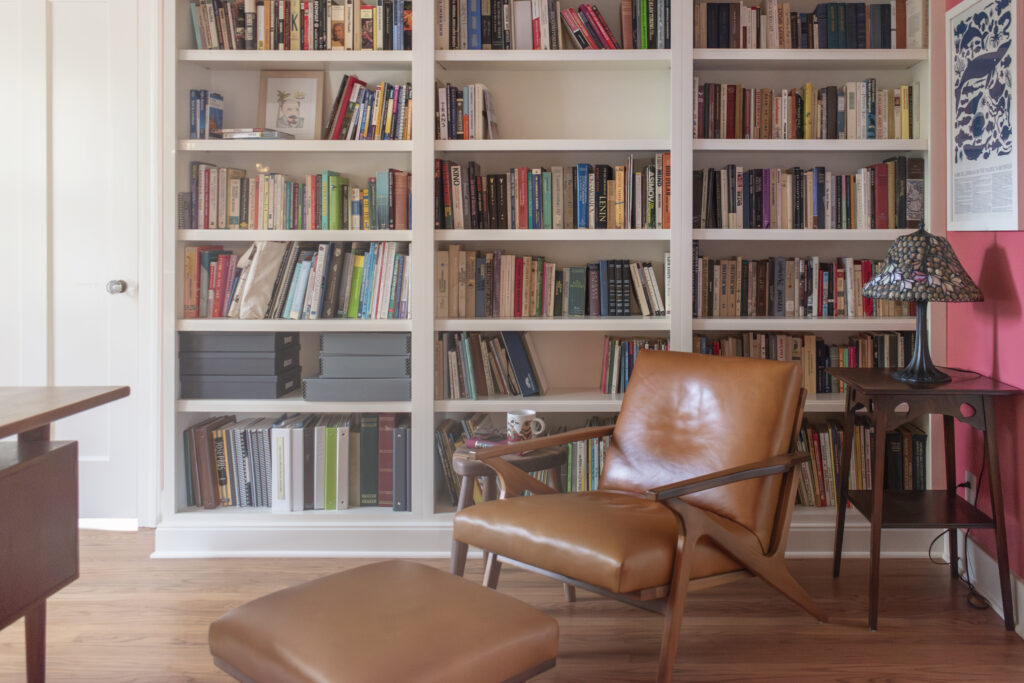
Key Takeaways  Personalized interior design is about creating spaces that reflect you. Your habits, values, and stories are the priorities, not following trends or templates.  Listening is the foundation of great design. Details that matter to you, even small ones, become the heart of meaningful spaces.  Design is not linear. It evolves through exploration, adaptability, and courage—with a trusted process to keep you supported every step of the way.  Personalized Interior Design  Have you ever walked into a beautifully designed space and felt…nothing?  It happens more often than you’d think. A kitchen can check every box—the right finishes, a smart layout, all the on-trend details—and still feel like it belongs to someone else.  Good design isn’t about getting it right. It’s about getting it right for you. We call that personalized interior design—spaces crafted around the people who actually live in them.  “The best kitchen is the kitchen that’s right for the person who uses it.”  One of our clients said this recently, and it’s stuck with me. It perfectly captures how we approach every project at SDG.  We don’t believe in a single “correct” layout, a trendy aesthetic everyone should want, or a universal color palette. Our approach blends creativity and practicality, the same balance that defines any great custom home design. Spaces aren’t supposed to be designed for everyone. They’re designed for you—the people who live in them, move through them, cook in them, read in them, celebrate and recharge in them.  And that kind of design? It’s not something you can download from Pinterest.  It has to be personal.  Listening Shapes the Details  Take a few minutes to watch this video, where a couple reflects on their experience designing their kitchen and home with us.  One of my favorite moments is when they describe asking for cork inlays in their kitchen. It was a small detail, easily overlooked. But listen to what happened:  “I was willing to let that go. I thought, you know, that’s probably pretty hard and maybe they weren’t really listening to me. And there it was right in the design from the very beginning.”  That cork inlay wasn’t just a design detail. It was a small request that showed they were truly heard. Every day, it brings a spark of joy and a reminder that their voice mattered in the process. It’s also what separates tailored interiors from generic ones. The details aren’t random; they’re chosen with care because they matter to the people who live there. To us, that’s what meaningful design looks like.  No Two Projects Should Be Alike  Some clients want sleek minimalism. Others want curated layers. One family might want a gallery wall of heirlooms; another wants clean, blank space to breathe.  In this project, the clients were avid book lovers—self-described owners of “perhaps too many” books. Most designers might see that as a constraint. We saw it as an opportunity to showcase their personality right at the entryway, through a custom bookshelf that now acts as a bold, welcoming signature of who they are.  “That may not be the right choice for everyone, maybe not even for most people…but it was for us.”  Exactly. And that’s the point.  When you walk into their home, you don’t see a designer’s portfolio piece. You see them. That’s what personalized interior design should achieve: a home that feels unmistakably yours.  What Personalized Interior Design Actually Looks Like  Personalized interior design doesn’t just feel differently, it functions differently, too. Over the years, we’ve designed spaces that include:  Hidden functionality that reflects how people really live. Pet nooks tucked in closets. Tech-free reading corners with perfect natural light. Drawers made just for takeout menus and charging stations.  Custom cabinetry built around how someone actually cooks or entertains, from kitchens designed around baking rituals to wine nights to family get-togethers where 30 people can gather around the island.  Accents with emotional resonance — reclaimed wood from a family barn, tile in the exact shade of a childhood home, and yes, cork inlays that surprise and delight every single day.  These aren’t luxuries for luxury’s sake. They’re the details that make a space feel like it’s working with you, not against you.  Room to Change Your Mind  Another theme that came through clearly in the video was flexibility. One of the clients admitted they “kept changing their mind” during the process—not out of indecision, but because they were discovering the space as it came to life.  “Every step along the way, Spectrum just reacted with kindness and patience and acceptance. I’m totally not used to that in my work. Previously, I would have ideas and people would say like, ‘Uh-huh, no, we’re not doing that.’ But at Spectrum, they’d be like, ‘Okay, yeah, totally. We can totally do that.’”  That’s not a flaw in the process. It’s part of what makes the process work.  Design is rarely linear. The right solution doesn’t always appear fully formed—it unfolds through iteration, exploration, and a bit of courage. As a space comes to life, new possibilities emerge, and our role is to stay nimble, collaborative, and supportive, helping you explore what the space could be, not just what you imagined at the start.  “What could have turned out to be kind of a stressful part of the project…always was resolved into comfort and a feeling of satisfaction.”  That’s not luck. That’s partnership.  A Process You Can Trust  One of the things clients tell us they appreciate most is clarity. At every step, you know what to expect. Before each meeting, you understand the goals. Afterward, you know what comes next—what we’re working on, what we need from you, and when we’ll reconnect. That kind of clarity is central to our interior design process. It’s what helps turn inspiration into real, livable results without the chaos so many homeowners fear. “Each time we went into a meeting, we understood what was going to happen… That was really comforting to have that sense of grounding within the process.”  There’s

Why Summer Is the Perfect Time to Plan Your Home Renovation

Why Summer Is The Perfect Time To Plan A Renovation

Summer has a unique way of revealing how we live in our homes. We often become more aware of what works in our spaces and what’s missing as we host friends, gather with family, and settle into the season’s slower rhythm. At Spectrum Design Group, we often find that summer is when the desire for a project takes shape. While the design process can begin now, clients should understand that meaningful transformation takes time. A project started in the summer may move into construction in the fall, with the full rewards often felt in the seasons to come. Here’s how we help clients prepare not just their homes, but their mindset, for the journey ahead. Define the Experience You Want When clients come to us with a project idea, they usually have inspiration images, wish lists, or even a few frustrations to solve. But before we dive into materials and floor plans, we ask a deeper question: How do you want to live in this space? Summer has a way of clarifying what matters most—whether it’s seamless indoor-outdoor flow, a kitchen that invites gathering, or spaces that offer calm and privacy. By focusing first on the experience, we can shape a design that is both beautiful and deeply personal. Understand the Timeline High-end residential projects involve many layers, from design development to permitting, ordering custom materials, and coordinating construction. While we can begin the design process in the summer, clients should be prepared for a timeline that extends into the fall and possibly beyond depending on the scope of work. We find that when clients understand this upfront, they approach the process with patience and enthusiasm rather than stress. Good design rewards those willing to invest in the journey. Embrace the Process Great design is not just about the final reveal. It’s about the experience along the way. We encourage clients to stay curious and engaged as the project unfolds, seeing it not as a disruption, but as a creative collaboration. Some of the most rewarding projects are those where clients remain open to ideas, trust the process, and allow the home to evolve into something even better than they imagined. Use This Summer as Research The best time to notice what you need is while you’re living your life. As you move through your home this summer, pay attention. Where do people gather naturally? What spaces feel underutilized? Which small annoyances hint at bigger design opportunities? When you bring these insights to your design team, you’re not simply launching a project, you’re shaping a vision grounded in real experience. Creating a Summer Sanctuary That Lasts Beyond the Season At SDG, we believe that home should be a place of sanctuary, beauty, and meaning. Whether a project begins in summer or any season, the key is preparing both the home and the mind. With clear intention, thoughtful planning, and trust in the process, your home can become a reflection of your best-lived life. Ready to start? Fill out our project inquiry form and we’ll chat soon.

Flatlay - Wallpaper, cabinetry, tile

Designing Through Uncertainty: Tariffs and Interior Design

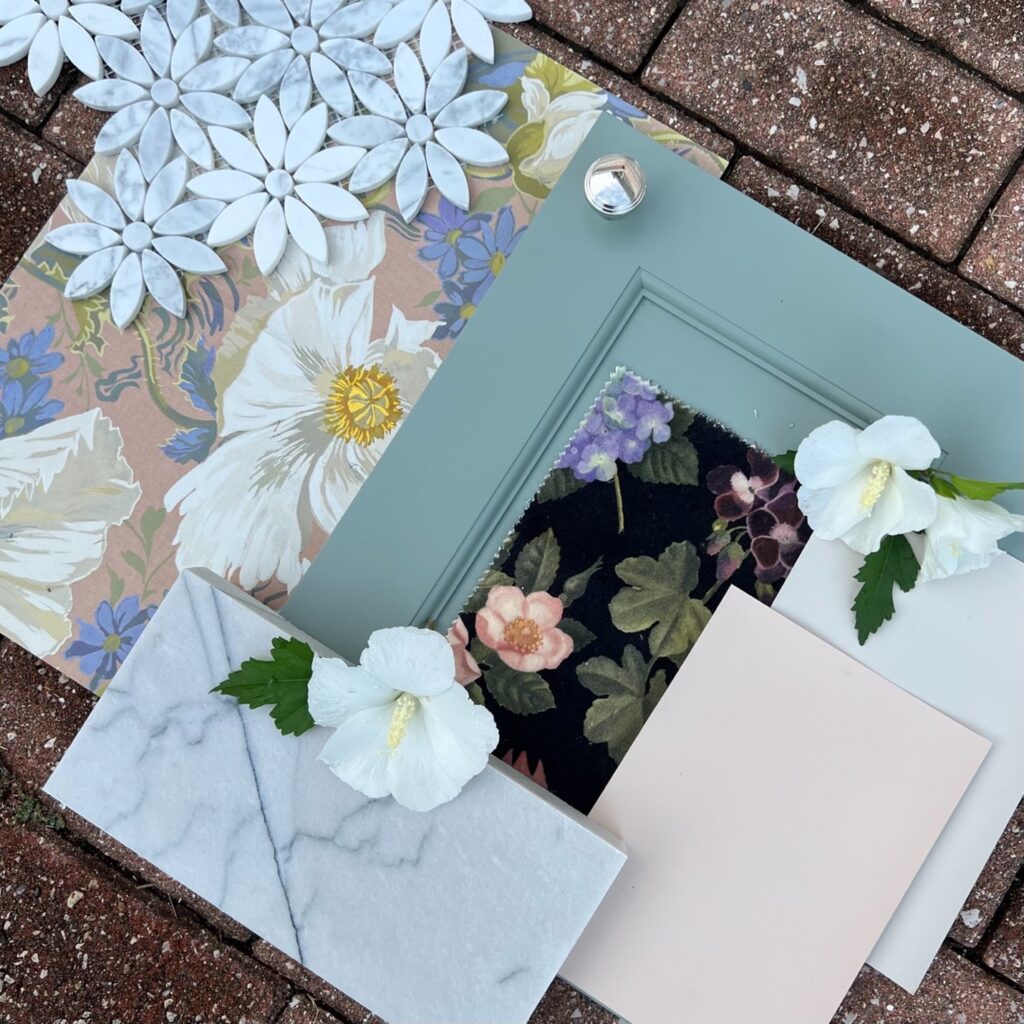
Tariffs are once again making headlines, raising questions across industries about how global trade tensions might ripple down to everyday decisions. For those of us in the world of custom interior design, this raises important, but not unfamiliar, questions. Will material costs rise? Will timelines shift? Should clients be concerned? At Spectrum Design Group, we’ve seen firsthand how quickly the design landscape can shift. The past few years taught us that uncertainty is part of the rhythm of doing business today. And we’re better for it. The pandemic and the resulting supply chain disruptions and inflation challenged us to work smarter, plan better, and lead with clarity. Those lessons are proving valuable once again as we face new waves of economic complexity. So, what does this new round of tariff talk really mean for our clients and design professionals like us? And how do we continue to deliver excellent, enduring work in a time when the rules are constantly evolving? We believe it starts with perspective. A Calm, Practical Approach The instinct in moments like this is to react. But at SDG, we choose to respond with thoughtfulness, not urgency. We’ve always believed that good design is intentional, not impulsive. That belief becomes even more important during periods of change. Tariffs may affect certain materials or products, both imported and domestic. But that doesn’t mean we quit and go home. It means we assess, adjust, and communicate. Every project is unique. That’s why we evaluate each one on a case-by-case basis. If a material cost changes or availability shifts, we look at alternatives. Sometimes those alternatives come from our deep bench of trusted vendors; other times, they’re creative solutions discovered in collaboration with the client. Flexibility is part of good design. Lessons from the Past Shape the Path Forward When the pandemic hit, the design world saw shipping delays, material shortages, and inflationary pressure that touched nearly every phase of a project. In that time, we didn’t just adapt, we evolved. We learned how to build more time into our planning, how to communicate more proactively with both clients and vendors, and how to make contingency planning a standard part of our process. These lessons are deeply embedded in how we work today. We don’t just hope for the best; we plan for the unexpected. That means identifying critical path items early, having backup options for key materials, and maintaining strong relationships with suppliers who know how to navigate change. Clients appreciate honesty more than perfection. They’d rather hear the truth about a lead time or a cost shift than be surprised later. That kind of clarity builds trust, and trust is the foundation of great design relationships. Designing with Trust, Not Trends We often say that the best projects are built on trust, not trends. And that’s never truer than in moments of uncertainty. When a client trusts the process—and the people guiding it—they don’t need to worry about every market fluctuation or headline. They know their project is in steady hands. Trends come and go. Headlines change. But thoughtful design, built on strong values and careful planning, endures. That’s our North Star at Spectrum Design Group. We don’t chase what’s new, we create what endures. So, while we are monitoring tariff news closely, we’re not letting it drive our decisions. We’re not rushing to change specs or pivot away from quality materials out of fear. Instead, we’re asking smart questions, staying in close contact with our partners, and finding new ways to meet our clients’ needs without sacrificing what matters most. What Clients Can Expect Now For clients currently in design or build phases, here’s what they can expect from us: Proactive communication. If there’s a potential cost shift or lead time concern, we’ll bring it to your attention early, with options. Strategic sourcing. We’re exploring both local and global supplier networks to maintain quality while adapting to potential shifting costs. Built-in flexibility. From day one, we’re designing with layers of adaptability. If we need to make a change, it won’t derail the vision. A steady, experienced team. We’ve been here before. We know how to navigate change, and we know how to do it without compromising design integrity. Looking Ahead: Steady Hands, Lasting Design Tariffs may shift how some goods move around the world. But they don’t change what makes a space meaningful. They don’t touch the creative process, the client relationships, or the craftsmanship that make our work special. Design is, at its core, an investment in the future. And investments should be made with confidence, not anxiety. Our role is to provide that confidence—to guide, advise, and adapt with grace when circumstances change. The uncertainty of today isn’t a reason to panic. It’s a reason to partner with people who can stay steady in the storm. At Spectrum Design Group, that’s what we do. Have questions about how current economic conditions might affect your project? We’re here to talk. Reach out anytime.

Responsibilities of Interior Designers and Clients

The Responsibilities of a Good Interior Designer and a Good Client

Last week, we discussed everything you need to know about interior designers and how to interview them to find the right fit for you and your project. But that’s only half of a successful partnership, which happens because the people involved have figured out how to communicate and trust one another. Their work together is productive, and they experience positive outcomes. Each person involved understands they have responsibilities to fulfill to meet their goals. The same is true for the relationship (partnership) between interior designers and their clients. Each party must fulfill its responsibilities to ensure a beautiful outcome. Many people, however, have never worked with an interior designer and are uncertain what to expect. Never fear; we’re here to help. Read on to learn what you should expect from your interior designer and what they expect from you. The Responsibilities of Good Interior Designers Every interior designer is responsible for ensuring your project runs smoothly, meeting expectations, and achieving goals. The best interior designers will: Listen. Your designer needs to be someone who listens to you. Every home tells a story, and your designer must learn it. A good designer will use that story to make the space beautiful but also functional and enduring. Communicate. Interior designers must keep you informed about what’s happening with your project. They should be available to answer questions and receptive to your feedback. Interior design is very personal, so two-way communication is paramount. Adhere to the budget. The budget should be established at the beginning of the project. Interior designers need to know this so they don’t design something you can’t afford. Some clients feel withholding their budget is in their best interest, but the opposite is true. Withholding your budget only leads to disappointment when the designer designs something that includes everything on your wish list, but you ultimately can’t afford it. However, once the interior designer knows the budget, they must design within those parameters. They should present plans far beyond your budget boundaries if you tell them of a budget increase or the scope of work increases. Your Responsibilities as a Good Client A successful project is a two-way street. Yes, you are hiring someone to work for you, but you have responsibilities as the client that also help ensure a successful project. Communicate. Decorators and designers sometimes feel they need a degree in psychology, but they aren’t mindreaders. Communicate with them. Let them know what you like and don’t like, and let them know sooner rather than later. You will not hurt their feelings. It’s much easier (and cheaper) to make changes early. Be responsive and decisive. Your project will only stay on schedule if you are an active participant. Answer emails and return phone calls promptly. Answer questions and make decisions as quickly as possible. If you plan on going out of town for an extended period or will be unreachable, let them know so they can work around those periods. We provide a schedule for the entire design at the beginning of the project. That schedule includes all the meeting dates so the designer and the client can address conflicts early and add all pertinent dates to their calendars. Have an open mind. You’re hiring a professional to help create a beautiful and meaningful space. They can see the big picture; good interior designers will meld the new space with the old. It’s exciting to see where a good designer can take space when clients allow them to be their most creative. I like the clients who stand back and let the designer do what they do best, as their projects are often the most unique and creative. Trust them. The best projects are those in which the client completely trusts the designer. If you don’t trust your designer to do their best work for you and address the pain points you want to alleviate, don’t hire them. It takes a lot of trust in someone to feel free to have an open mind and to watch them take a project in a direction you may not have envisioned, but if you can trust the person you hired, your end product will be phenomenal. Begin with a realistic budget. Good interior designers will let you know immediately if your budget aligns with your vision or if you have champagne taste on a beer budget. If the budget is close, they can help you narrow your wish list so it works; otherwise, they should be upfront with you and explain that what you want cannot be done within your budget. Often, though, the scope of a project grows as the design progresses. For instance, you hire someone to redesign your kitchen, but then you realize you want the adjoining entryway updated as well, and the other walls look dingy now, so you want to paint the neighboring rooms, too. Unless you’re willing to cut some of your wish list items from the initially contracted kitchen project, you will need to increase your budget for both time and materials because now your designer is spending time on other areas outside the initial scope, and those areas will require additional materials. It may not seem like much, but scope creep is a big deal. Your designer isn’t trying to nickel and dime you or trick you. The increased scope does take more time. Working Together Communication and trust go a long way in building any relationship. When the right fit is found, the relationship built between a client and an interior designer can last for years. People may start as clients, but in the end, we call them family. It’s a beautiful business.

Spectrum Design Group - Guide to Working with an Interior Designer

Your Guide to Working with an Interior Designer

Working with an interior designer can transform your living space from functional to fabulous, but understanding what they do and how they differ from decorators is crucial when embarking on a design project.  Whether renovating a single room or undertaking a whole-home makeover, here’s what you need to know about interior design, working with a designer, and what to consider when choosing the right professional for your project. What Is Interior Design? Interior design is the art and science of enhancing a building’s interior to create a more functional and beautiful environment. However, it’s about more than just aesthetics.  While interior design certainly focuses on making a space beautiful, it’s also about creating a functional and efficient space that meets your needs. One of the most important aspects of interior design is space planning, which involves creating a layout that maximizes the functionality and flow of a space.  Finishes are also important as they can affect mood and set the tone for a space. It’s important to choose colors that complement each other and fit the style and purpose of the room.  Lighting is another crucial aspect of interior design. It creates ambiance, highlights design elements, and affects how colors and textures are perceived. Interior design requires attention to many small details, from selecting the right cabinet hardware to choosing the perfect bathroom towel rings, bars, and robe hooks.. Every detail counts when it comes to creating a cohesive and beautiful environment.  Overall, interior design is concerned with ensuring a home’s fixed elements serve the people using it. Creating a beautiful and functional space requires creativity, technical skills, and attention to detail. What Is an Interior Designer? An Interior designer is trained in architecture, design, and building codes and can help with space planning, structural changes, and construction. They combine artistic flair with technical expertise to enhance residential or commercial environments’ functionality, safety, and beauty.  Unlike interior decorators, who focus primarily on aesthetics and furnishings, interior designers are trained to handle structural changes or major renovations.  If you are doing a larger project that involves major renovation, it may be best to work with an interior designer.  What Is an Interior Decorator? While both interior designers and decorators enhance the appearance of spaces, their roles differ significantly in scope and expertise. Interior decorators specialize in furnishings, fabrics, and aesthetics, focusing more on surface-level transformations and decor choices. An interior decorator may be the best choice if you primarily focus on decorating an existing space, such as updating the furniture and décor.  Ultimately, the decision to hire an interior designer or decorator will depend on your specific needs and the scope of your project. Researching and interviewing potential professionals is essential to finding the right fit for your project. What to Expect from Working with an Interior Designer An interior designer helps transform your living space into a functional and aesthetically pleasing environment. When you engage an interior designer, you tap into a wealth of knowledge and creativity to transform your vision into reality.  They’ll start by understanding your needs, preferences, and lifestyle to create a customized design plan. Expect thorough consultations, detailed space assessments, and collaborative discussions to refine your design goals.  A good designer will guide you through material selections, color schemes, furniture layouts, and lighting plans, ensuring that every aspect aligns with your aesthetic preferences and functional requirements. Once the design work is completed, some interior designers will manage the construction phase of your project (we do!).  Overall, an interior designer provides you with the expertise, creativity, and resources necessary to create a beautiful and functional environment that reflects your unique style and meets your specific needs. The Interior Design Process Our approach to interior design is comprehensive and client-centered. We begin with an initial consultation to discuss your project scope, budget, and timeline. This phase is crucial for understanding your vision and establishing clear objectives. Following this, we conduct a detailed assessment of your space, considering architectural features, existing furnishings, and structural considerations. The design development phase involves conceptualizing layouts, selecting materials, and presenting design proposals tailored to your preferences. We collaborate closely with you, refining designs based on your feedback until we achieve a concept that exceeds your expectations.  Once the design is finalized, we move into the implementation phase, where we manage the project from procurement and construction oversight to final installation and styling.  Our goal is to ensure a seamless transition from concept to completion, delivering a space that reflects your personality and enhances your lifestyle. Managing the Entire Project Beyond design conceptualization, many interior designers offer project management services to oversee every aspect of the implementation phase. This includes coordinating with contractors, managing timelines and budgets, and ensuring construction meets design specifications.  By taking on project management responsibilities, designers streamline the process for clients, alleviating stress and ensuring that the final result aligns with the approved design vision. Questions to Ask an Interior Designer When selecting an interior designer for your project, it’s essential to ask the right questions to ensure a good fit and a successful outcome: What is your design philosophy and style? Look for an answer that aligns with your preferences and your desired functionality. A professional designer should articulate a clear philosophy that resonates with your vision for the space. Can you provide examples of past projects similar to mine? Ideally, the designer should showcase relevant projects demonstrating their ability to handle similar challenges and achieve desired outcomes. Pay attention to the quality of work and whether it matches your expectations. How do you charge for your services, and what is included in your fee? It is important to have a transparent answer detailing whether they charge a flat fee, hourly rate, or percentage of the project cost. Also, understand the services included in this fee, such as design concepts, procurement, and project management. Do you have experience working within my budget range? The designer should have experience working across various budget ranges. They should discuss managing costs,

Scroll to Top