Spectrum Design Group

enduring design

Primary Bathroom Renovation: Why the Details Matter

The Primary Bathroom Renovation Advice That Gets It Wrong

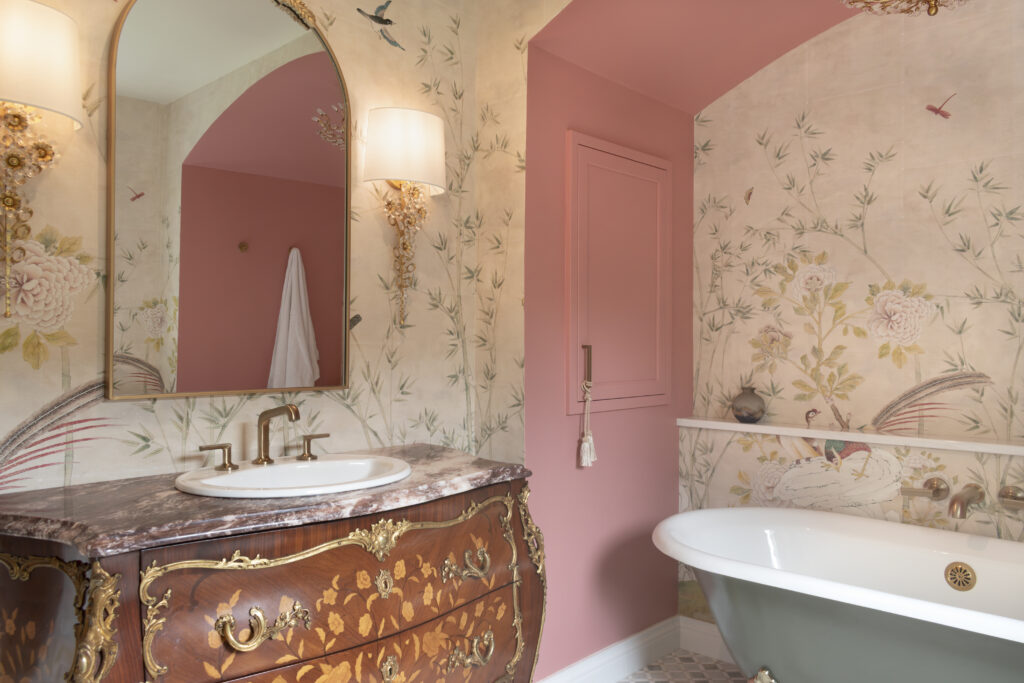
Key Takeaways The successful construction of a primary bathroom depends on more than a unified design vision—it requires attention to layout, sequencing, and buildable details. Many renovation problems stem from decisions made too late or without considering how materials and fixtures fit together, outside of aesthetics. Thoughtful planning early in the process helps prevent costly mistakes, protects the budget, and results in a bathroom that functions well for daily life. Before You Start a Primary Bathroom Renovation Last week, I came across a post in one of our local Facebook groups. A woman was looking for recommendations for someone to “draw up ideas/plans” for a primary bathroom renovation. She and her husband planned to do most of the work themselves, aside from plumbing and electrical. They didn’t need a contractor. Just ideas and plans. One of the replies said: “Talk with a quality contractor. You could even go to a supplier showroom. Don’t get lost in details. Try to have a unified concept or vision of what you want.” I have no way of knowing what he intended beyond his words, but I think he was likely saying, “Don’t overcomplicate it. Keep the big picture in mind.” That’s practical advice. But I couldn’t stop thinking about that one line: Don’t get lost in the details. Even hours later, I brought it up to my teenager, who looked at me and said, “Well, yeah, Mom. That’s kinda your job.” True. To a degree. Primary Bathroom Renovation: Why the Details Matter A good remodel is almost entirely about the details. Not the fussy, decorative kind—the structural ones. The ones that require sequencing. These are the decisions that no one posts about after the fact because they’re invisible once everything is finished. When people say, “just draw up plans,” it sounds simple. A layout. Some dimensions. Maybe a few elevations. But a bathroom isn’t a sketch. It’s a tight choreography of plumbing, framing, lighting, tile, cabinetry, and human movement. Inches, order, and timing all matter, especially in a bathroom. Where the shower valve lands in relation to the shower door swing. Whether the vanity drawers clear the casing. How tile terminates at an outside corner. How high the sconces sit once the mirror is installed. Those aren’t decorative details. They’re the details that determine whether a space feels right or slightly off every single day you use it. And they’re usually the things that go wrong when no one is assigned to think about them before the work starts. Where Bathroom Renovation Planning Goes Wrong I understand the appeal of keeping it simple, especially if you’re managing the work yourself. A primary bathroom renovation can already feel overwhelming, and the last thing anyone wants is to be buried under decisions. But problems don’t usually come from thinking too carefully. They come from not thinking things through (i.e. skipping the details). Tile selected after rough-in. Lighting chosen after the electrician has finished. Cabinetry ordered before final dimensions are confirmed. That’s when budgets shift. That’s when “we’ll just make it work” becomes a permanent bottleneck in the morning routine. There’s a difference between obsessing over perfection and being intentional. Being intentional means asking: How will the primary bathroom function at 6:30 a.m. on a weekday? Where will towels land? What happens when two people try to get ready at once? Will it still feel good in five years? Those answers aren’t found in a showroom, nor are they solved by a quickly sketched plan. A unified vision is important, but the vision won’t hold up for long under daily living conditions without the details. Detail is what turns preference into something buildable. The Value of a Design Team in a Bathroom Renovation Which brings me back to my teenager telling me this is my job—and a poorly kept secret. I am the one person in this office you don’t want in charge of your renovation. There are a variety of reasons, but for this article, let’s keep it to one (I don’t want to crush my self-confidence too much). I don’t see the details, at least not when it comes to design. Sure, I may pick up on some that most people wouldn’t because I work in the design world. But overall, I will not be able to tell you why a valve shouldn’t go in a certain place or why a particular faucet won’t work with the mirror at a certain height until it’s actually in place. I can’t visualize how something will truly come together unless I can see it. That’s where this incredible design team—from our principal to our interior designers to our project manager—takes something from good to great. They understand how the details shape the outcome and that knowledge changes everything. Here’s what I find interesting: the bathrooms that feel the most calm, the most cohesive, the most effortless to live in are almost always the ones where someone paid close attention to the details early in the process. They don’t feel overly designed. They simply feel like they work. That’s not an accident; it’s the result of a lot of quiet decisions made before anyone picked up a tool. So no, you shouldn’t get lost in the details. But you shouldn’t skip them, either. In remodeling, the details aren’t the distraction. They’re what makes the difference between a primary bathroom renovation that runs smoothly and one that costs more in both time and money, and between a project you simply finish and one you’re proud of.
Flexible Interior Design - Sunroom doubles as yoga space

Designing a Home that Grows with You

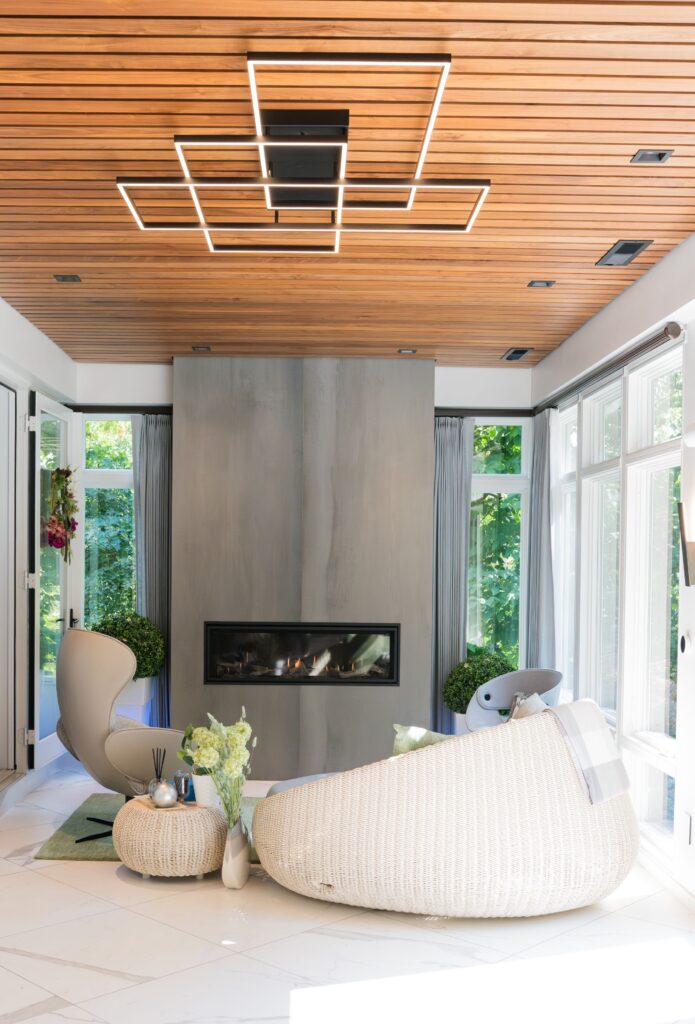
Key Takeaways for Flexible Interior Design Thoughtful interior design supports changing lifestyles and multi-functional living. Flexible layouts and timeless materials help future-proof your home. Real examples show how adaptive spaces elevate both daily life and long-term value. Why Personal Experience Shapes Better Design Flexible interior design isn’t about having more space. It’s about making your space work better for the life you actually live. I’ve lived in the same house since I bought it years ago. It’s not large. There’s no kitchen table. But the space works, because it has to. And maybe that’s what has taught me the most about design: when space is limited, design can’t just look good. It has to hold up, shift gears, and make room for whatever life brings.  There was a season when that meant game nights. Once a month or so, a group of us (friends, coworkers, spouses) would pile into the living room. We pulled chairs from every corner of the house, crammed onto the couch, and used the coffee table for snacks, scorecards, and game pieces that somehow always ended up under the furniture. The space flexed, not because it was big, but because it was thoughtfully planned. It knew how to stretch.  Then life shifted. Kids came along. Some of us moved. And the way we used our homes changed. But that rhythm of gathering didn’t disappear; it evolved. Now it looks more like a group of guys sitting around a fire pit once a month, or conversations that stretch late into the evening. The coffee table might not be covered in game pieces anymore, but it’s still part of the story.  Designing for Evolving Lifestyles  This is what I think about when I work with clients. Everyone comes in with a vision—the kitchen that accommodates 30 family members at Thanksgiving, the primary suite that allows for the business of the day to be left at the door, the sunroom with a fireplace that doubles as a yoga space. And that matters. But the longer I do this work, the more I see the value in designing not just for what life looks like today, but for what it might become.  Because rooms change roles. A space that starts as a guest room becomes a nursery. A playroom becomes a study zone. A quiet corner becomes the most used spot in the house. And the best interiors aren’t the ones that resist those changes; they’re the ones that welcome them.  I had a client a few years ago who wanted a cozy space where she could retreat to read and sometimes work on her laptop without distraction. It had to be her own. In fact, she told me that she had dreamed about having such a place and wondered if we could transform an existing closet into her “fantasy.” And so, what was once used as a closet for years became my client’s fantasy.   What Flexible Interior Design Looks Like in Practice  That doesn’t mean you design everything to be multipurpose. It means you design it with just enough give. You plan for good circulation, intuitive flow, and materials that can take a hit and still look good. You build in storage that doesn’t announce itself. You make sure the outlets are where you’ll need them—even if you don’t know it yet.  This kind of flexibility isn’t always flashy, but it shows up in the details:  Built-ins that evolve in function over time  Zones that can grow or shrink as household needs shift  Millwork and cabinetry that look clean and intentional, but offer hidden storage or dual use  Lighting that changes the mood depending on how a space is used, not just what time of day it is  When we talk about future-proofing homes, we’re not talking about guessing what’s next. We’re designing for range. For possibility. For use cases that haven’t happened yet.  Designing a Home that Grows with You  The reality is that most people don’t overhaul their homes every few years. They live in them. They grow up in them. They raise families, change careers, start new chapters, and sometimes even circle back to old routines, all in the same square footage.  And if that home was designed well? It can keep pace with all of it.  I’ve seen it firsthand in my own home. That same small footprint has adapted through game nights, growing kids, quiet mornings, and messy evenings. Not because it’s perfect. But because it was designed to make space for all of it.  In client projects, I look for the same opportunities. Recently, I worked with a couple who had kids at various stages, from preschool to high school. What wasn’t different between them was all the “stuff” that comes with raising kids—backpacks, coats, shoes, band instruments. What we designed was a room off the kitchen that could handle the demands of their current storage needs and function as additional pantry space. Down the road, this room could become a full-on pantry or an extra room for grandma. Lots of opportunities! What this room actually has is the potential to function in a variety of ways because of its thoughtful size and where it fits within the traffic flow of the home. This is exactly the kind of challenge flexible interior design is built to solve—creating beautiful, usable space that adapts as your life shifts. Questions that Guide Flexible Interior Design Here are the types of questions I ask in every project:  Can this family room evolve into something else later?  Will this kitchen layout still make sense if there are five people around the island instead of two?  Are we creating spaces that feel as good during a holiday gathering as they do on a Tuesday night?  These aren’t just practical questions; they shape how the space is planned, built, and finished. When we ask them early, we’re not just designing for how a home will look on move-in day. We’re designing for how it will live five, ten,

Personalized Interior Design. A home for book lovers.

The Power of Personalized Interior Design

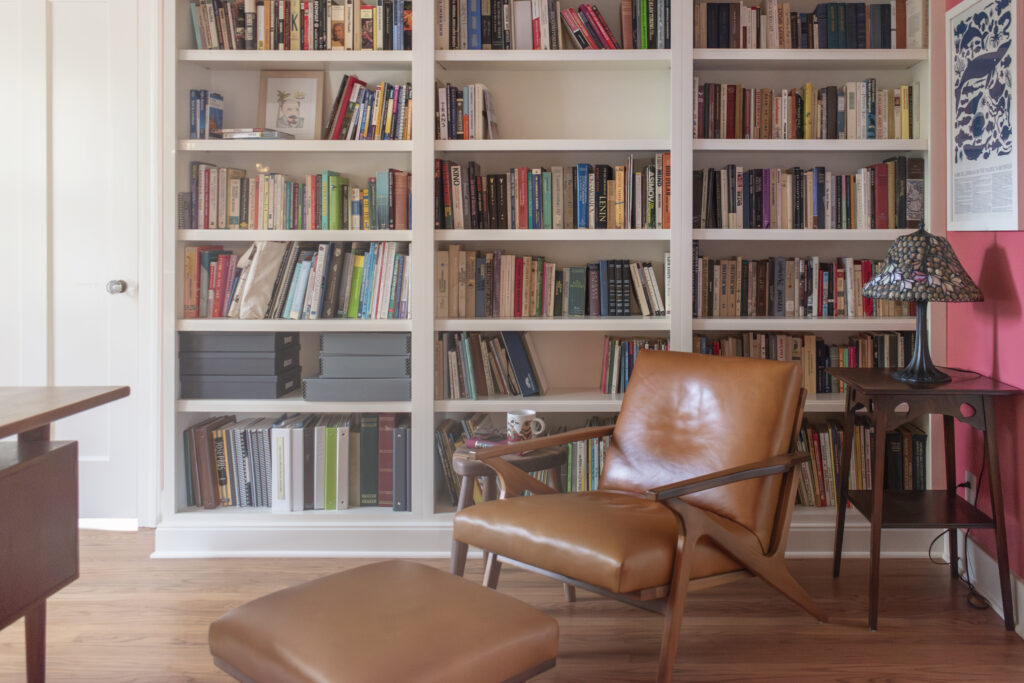
Key Takeaways  Personalized interior design is about creating spaces that reflect you. Your habits, values, and stories are the priorities, not following trends or templates.  Listening is the foundation of great design. Details that matter to you, even small ones, become the heart of meaningful spaces.  Design is not linear. It evolves through exploration, adaptability, and courage—with a trusted process to keep you supported every step of the way.  Personalized Interior Design  Have you ever walked into a beautifully designed space and felt…nothing?  It happens more often than you’d think. A kitchen can check every box—the right finishes, a smart layout, all the on-trend details—and still feel like it belongs to someone else.  Good design isn’t about getting it right. It’s about getting it right for you. We call that personalized interior design—spaces crafted around the people who actually live in them.  “The best kitchen is the kitchen that’s right for the person who uses it.”  One of our clients said this recently, and it’s stuck with me. It perfectly captures how we approach every project at SDG.  We don’t believe in a single “correct” layout, a trendy aesthetic everyone should want, or a universal color palette. Our approach blends creativity and practicality, the same balance that defines any great custom home design. Spaces aren’t supposed to be designed for everyone. They’re designed for you—the people who live in them, move through them, cook in them, read in them, celebrate and recharge in them.  And that kind of design? It’s not something you can download from Pinterest.  It has to be personal.  Listening Shapes the Details  Take a few minutes to watch this video, where a couple reflects on their experience designing their kitchen and home with us.  One of my favorite moments is when they describe asking for cork inlays in their kitchen. It was a small detail, easily overlooked. But listen to what happened:  “I was willing to let that go. I thought, you know, that’s probably pretty hard and maybe they weren’t really listening to me. And there it was right in the design from the very beginning.”  That cork inlay wasn’t just a design detail. It was a small request that showed they were truly heard. Every day, it brings a spark of joy and a reminder that their voice mattered in the process. It’s also what separates tailored interiors from generic ones. The details aren’t random; they’re chosen with care because they matter to the people who live there. To us, that’s what meaningful design looks like.  No Two Projects Should Be Alike  Some clients want sleek minimalism. Others want curated layers. One family might want a gallery wall of heirlooms; another wants clean, blank space to breathe.  In this project, the clients were avid book lovers—self-described owners of “perhaps too many” books. Most designers might see that as a constraint. We saw it as an opportunity to showcase their personality right at the entryway, through a custom bookshelf that now acts as a bold, welcoming signature of who they are.  “That may not be the right choice for everyone, maybe not even for most people…but it was for us.”  Exactly. And that’s the point.  When you walk into their home, you don’t see a designer’s portfolio piece. You see them. That’s what personalized interior design should achieve: a home that feels unmistakably yours.  What Personalized Interior Design Actually Looks Like  Personalized interior design doesn’t just feel differently, it functions differently, too. Over the years, we’ve designed spaces that include:  Hidden functionality that reflects how people really live. Pet nooks tucked in closets. Tech-free reading corners with perfect natural light. Drawers made just for takeout menus and charging stations.  Custom cabinetry built around how someone actually cooks or entertains, from kitchens designed around baking rituals to wine nights to family get-togethers where 30 people can gather around the island.  Accents with emotional resonance — reclaimed wood from a family barn, tile in the exact shade of a childhood home, and yes, cork inlays that surprise and delight every single day.  These aren’t luxuries for luxury’s sake. They’re the details that make a space feel like it’s working with you, not against you.  Room to Change Your Mind  Another theme that came through clearly in the video was flexibility. One of the clients admitted they “kept changing their mind” during the process—not out of indecision, but because they were discovering the space as it came to life.  “Every step along the way, Spectrum just reacted with kindness and patience and acceptance. I’m totally not used to that in my work. Previously, I would have ideas and people would say like, ‘Uh-huh, no, we’re not doing that.’ But at Spectrum, they’d be like, ‘Okay, yeah, totally. We can totally do that.’”  That’s not a flaw in the process. It’s part of what makes the process work.  Design is rarely linear. The right solution doesn’t always appear fully formed—it unfolds through iteration, exploration, and a bit of courage. As a space comes to life, new possibilities emerge, and our role is to stay nimble, collaborative, and supportive, helping you explore what the space could be, not just what you imagined at the start.  “What could have turned out to be kind of a stressful part of the project…always was resolved into comfort and a feeling of satisfaction.”  That’s not luck. That’s partnership.  A Process You Can Trust  One of the things clients tell us they appreciate most is clarity. At every step, you know what to expect. Before each meeting, you understand the goals. Afterward, you know what comes next—what we’re working on, what we need from you, and when we’ll reconnect. That kind of clarity is central to our interior design process. It’s what helps turn inspiration into real, livable results without the chaos so many homeowners fear. “Each time we went into a meeting, we understood what was going to happen… That was really comforting to have that sense of grounding within the process.”  There’s

Flatlay - Wallpaper, cabinetry, tile

Designing Through Uncertainty: Tariffs and Interior Design

Tariffs are once again making headlines, raising questions across industries about how global trade tensions might ripple down to everyday decisions. For those of us in the world of custom interior design, this raises important, but not unfamiliar, questions. Will material costs rise? Will timelines shift? Should clients be concerned? At Spectrum Design Group, we’ve seen firsthand how quickly the design landscape can shift. The past few years taught us that uncertainty is part of the rhythm of doing business today. And we’re better for it. The pandemic and the resulting supply chain disruptions and inflation challenged us to work smarter, plan better, and lead with clarity. Those lessons are proving valuable once again as we face new waves of economic complexity. So, what does this new round of tariff talk really mean for our clients and design professionals like us? And how do we continue to deliver excellent, enduring work in a time when the rules are constantly evolving? We believe it starts with perspective. A Calm, Practical Approach The instinct in moments like this is to react. But at SDG, we choose to respond with thoughtfulness, not urgency. We’ve always believed that good design is intentional, not impulsive. That belief becomes even more important during periods of change. Tariffs may affect certain materials or products, both imported and domestic. But that doesn’t mean we quit and go home. It means we assess, adjust, and communicate. Every project is unique. That’s why we evaluate each one on a case-by-case basis. If a material cost changes or availability shifts, we look at alternatives. Sometimes those alternatives come from our deep bench of trusted vendors; other times, they’re creative solutions discovered in collaboration with the client. Flexibility is part of good design. Lessons from the Past Shape the Path Forward When the pandemic hit, the design world saw shipping delays, material shortages, and inflationary pressure that touched nearly every phase of a project. In that time, we didn’t just adapt, we evolved. We learned how to build more time into our planning, how to communicate more proactively with both clients and vendors, and how to make contingency planning a standard part of our process. These lessons are deeply embedded in how we work today. We don’t just hope for the best; we plan for the unexpected. That means identifying critical path items early, having backup options for key materials, and maintaining strong relationships with suppliers who know how to navigate change. Clients appreciate honesty more than perfection. They’d rather hear the truth about a lead time or a cost shift than be surprised later. That kind of clarity builds trust, and trust is the foundation of great design relationships. Designing with Trust, Not Trends We often say that the best projects are built on trust, not trends. And that’s never truer than in moments of uncertainty. When a client trusts the process—and the people guiding it—they don’t need to worry about every market fluctuation or headline. They know their project is in steady hands. Trends come and go. Headlines change. But thoughtful design, built on strong values and careful planning, endures. That’s our North Star at Spectrum Design Group. We don’t chase what’s new, we create what endures. So, while we are monitoring tariff news closely, we’re not letting it drive our decisions. We’re not rushing to change specs or pivot away from quality materials out of fear. Instead, we’re asking smart questions, staying in close contact with our partners, and finding new ways to meet our clients’ needs without sacrificing what matters most. What Clients Can Expect Now For clients currently in design or build phases, here’s what they can expect from us: Proactive communication. If there’s a potential cost shift or lead time concern, we’ll bring it to your attention early, with options. Strategic sourcing. We’re exploring both local and global supplier networks to maintain quality while adapting to potential shifting costs. Built-in flexibility. From day one, we’re designing with layers of adaptability. If we need to make a change, it won’t derail the vision. A steady, experienced team. We’ve been here before. We know how to navigate change, and we know how to do it without compromising design integrity. Looking Ahead: Steady Hands, Lasting Design Tariffs may shift how some goods move around the world. But they don’t change what makes a space meaningful. They don’t touch the creative process, the client relationships, or the craftsmanship that make our work special. Design is, at its core, an investment in the future. And investments should be made with confidence, not anxiety. Our role is to provide that confidence—to guide, advise, and adapt with grace when circumstances change. The uncertainty of today isn’t a reason to panic. It’s a reason to partner with people who can stay steady in the storm. At Spectrum Design Group, that’s what we do. Have questions about how current economic conditions might affect your project? We’re here to talk. Reach out anytime.

Excellence in Interior Design

Excellence in Interior Design Doesn’t Just Happen

Usain Bolt didn’t wake up one morning and decide to break the 100-meter world record. F.A. Porsche didn’t sketch the 911 the night before its debut at the 1963 Frankfurt Auto Show. Madam Curie didn’t stumble upon radium by chance. These milestones took years of dedication, setbacks, and relentless passion. Great things rarely just happen and creating a home that truly reflects you is no exception.  We’ve all heard the classic request, “I want excellent quality, I want it fast, and I want it cheap.” And the classic response, “Pick two.” Every project has different priorities: Budget, timeline, or level of design. What matters most to you will shape the path forward. Our process best suits clients who value thoughtful design and the time and resources it takes to achieve it. If speed or cost savings are your top priorities, we’re happy to guide you toward solutions that fit those goals, even if it’s not with us.  Excellence Takes Time  It took years of experiments, breakthroughs, and setbacks for Madam Curie to finally isolate Radium. Your interior design project won’t take that long, but thoughtful spaces aren’t rushed.   A personalized design starts with listening. It’s imperative to get to know you and how you live. Every detail, from how you move through your space to how it makes you feel, matters. The magic happens when we understand how you live and what brings you joy. Whether it’s sourcing one-of-a-kind materials or creating a custom piece just for you, the process is deliberate, and the results are spaces that truly feel like yours.  Excellence Takes Resources  Porsche invested heavily to perfect the 911. While not every project demands that scale, excellence requires an appropriate budget. Quality design takes time, premium materials, and skilled craftsmanship—all valuable investments. Excellence isn’t about spending endlessly; it’s about making intentional choices that reflect your priorities. We’re here to help you invest wisely, ensuring your budget supports both your vision and the quality you deserve.  Excellence is Not Perfection  Excellence isn’t perfection. Excellence is about delivering our very best. We combine our talent, tools, access, and passion to create something exceptional. Excellence is a big part of our culture at SDG. It’s not just about the deliverable. It’s also the experience of getting to the deliverable. Our experience coupled with your trust is what allows your project to reach its maximum level of excellence.  Perfection is elusive, especially in renovations, where every home has its quirks. Our goal isn’t flawlessness; it’s delivering the best possible result with honesty and care. With your trust and our expertise, we’ll navigate challenges together to create something remarkable.   Excellence is Not the Path of Least Resistance  Usain Bolt had amazing natural talent, but it wasn’t until he was in his twenties that he started to take his training seriously. He had to remove distractions and focus intensely on his training. Discipline made him unbeatable.   Excellence isn’t about shortcuts; it’s about doing the hard work to push beyond “good enough.” The same is true with how we approach our work.  We love solving complex design puzzles to make your space not just functional, but extraordinary. Sometimes that means taking the harder route. Choosing a solution that’s more involved but yields a far more satisfying result. We believe you’ll feel the difference every day you live in it.  Committed to Excellence in Interior Design  Next time you step into a beautifully designed space, notice how everything works in harmony—the textures, the lighting, the thoughtful details. Those unseen hours of collaboration, craftsmanship, and intention are what create environments that tell stories, evoke emotion, and enhance everyday life. That’s the kind of excellence we’re committed to delivering for you. 

Scroll to Top